Her Disability Was Being a Woman
A 1963 Court Petition and the Legacy It Built.
By Lara Shackelford, CEO, Hawksmoor.ai · May 26, 2026
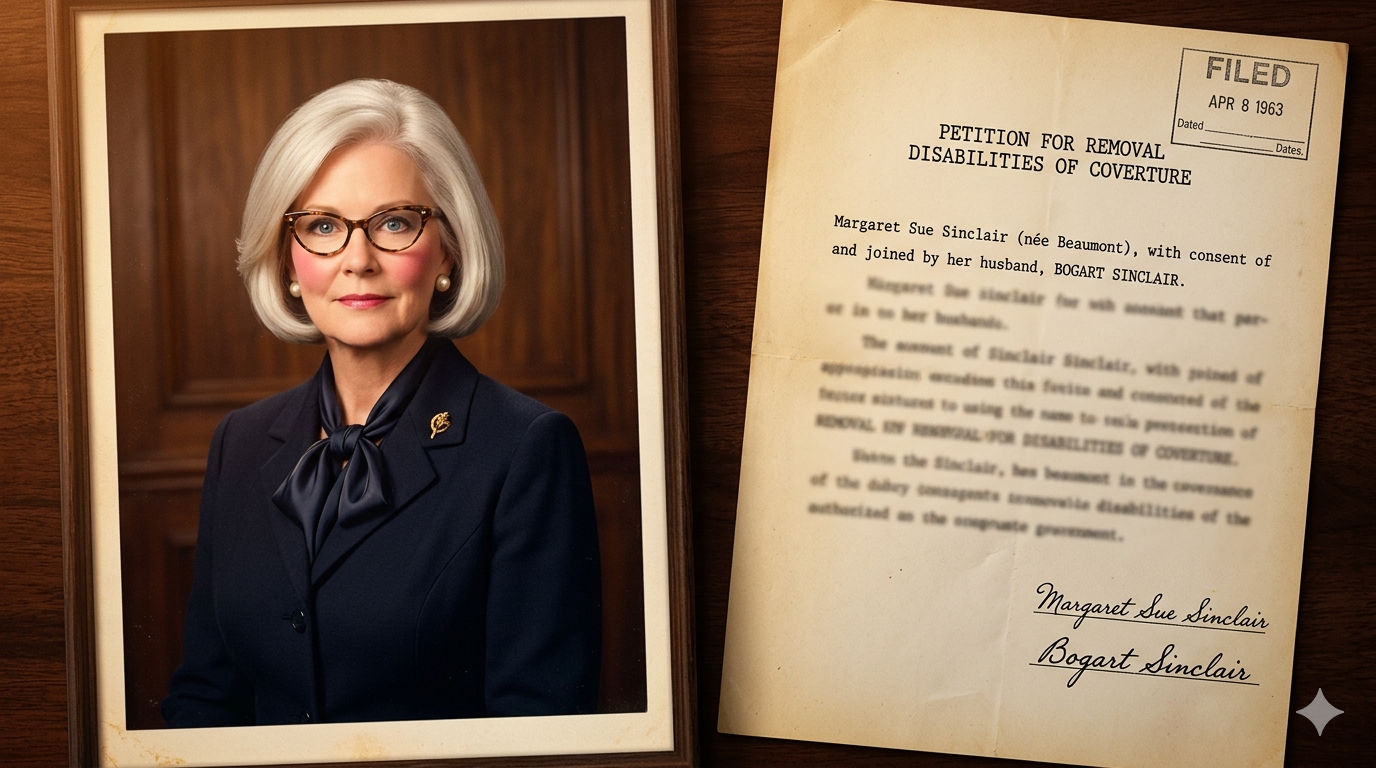
In 1963, in Dallas County, Texas, a woman walked into a courtroom to petition for the right to do business.
She was already a licensed real estate broker with years of profitable deals behind her.
None of that mattered.
Under Texas law, she carried a legal classification called “coverture.” A married woman could not enter into contracts, sue or be sued, or conduct business on her own. Her legal identity was absorbed into her husband’s. In the eyes of the law, she was in the same category as children and people deemed mentally incompetent.
Her disability was being a woman.
I know this story because she was the great-grandmother of my best friend. We called her Granny Sinclair. She was one of the most formidable people I have ever known.
The paperwork tells part of the story.
The petition, filed in 1963 in a Dallas County district court, lays it out in the detached language of the law. Margaret and Bogart Sinclair asked the court to remove the “disabilities of coverture.” The goal: allowing her to operate as a “feme sole” for mercantile and trading purposes.
Yesterday was Memorial Day. Bogart served in World War II. He came home, married the woman he loved, and spent the rest of his life supporting her ambitions as fiercely as she supported his. He signed the petition beside her without hesitation.
The court agreed. The disabilities of coverture were removed. Margaret Sinclair was granted the legal status of a single woman for the purpose of doing business.
And then she went out and became a legend. The system told her she could not. That did not stop her. It fueled her.
The woman behind the paperwork.
Granny Sinclair dominated the Dallas real estate market for decades. She had earned it long before the court gave her permission.
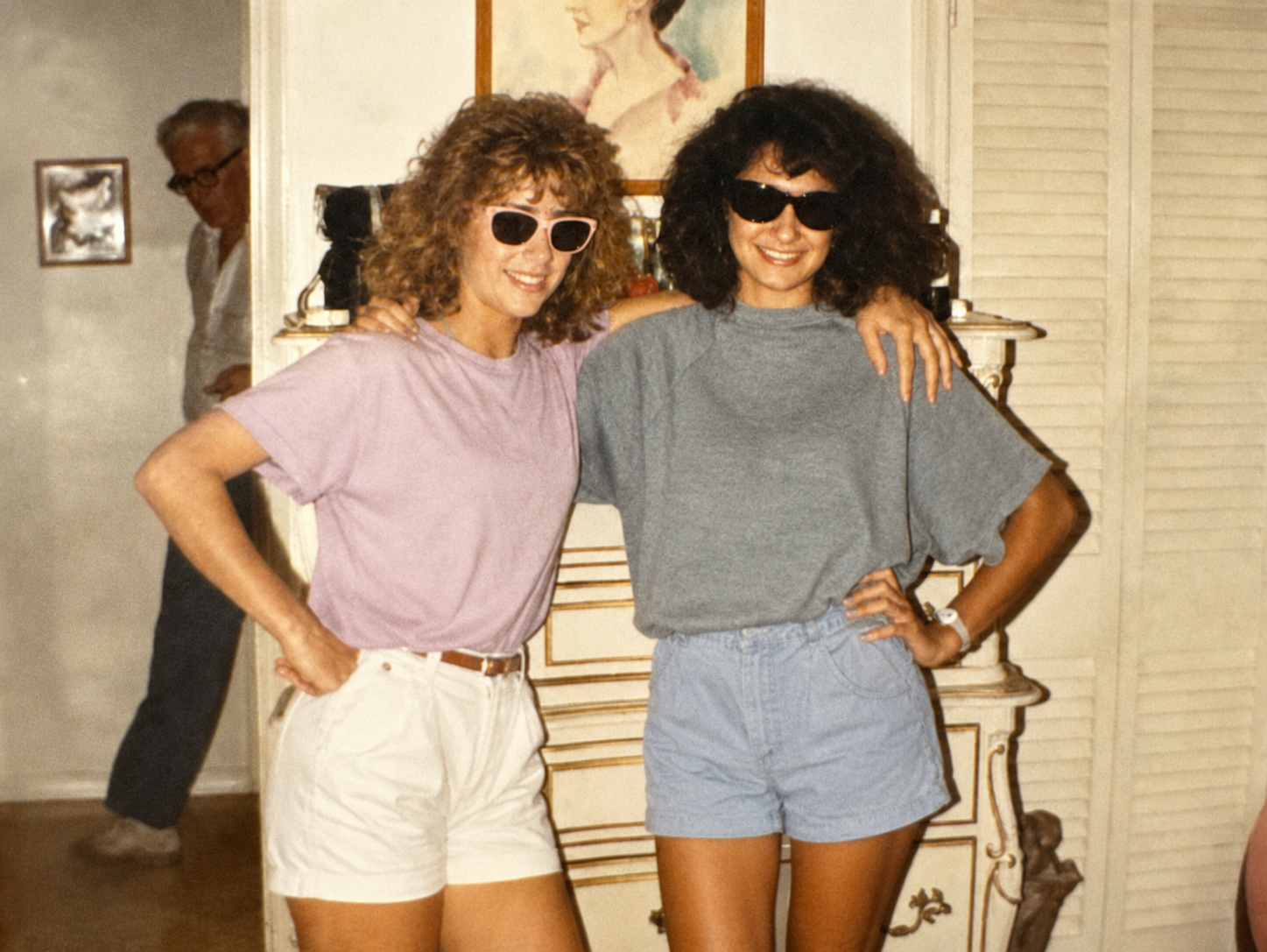
My best friend moved to Dallas when I was in high school. I was lucky enough that my parents sent me to visit every summer. Three weeks every summer at her great-grandparents’ house. Some of the best weeks of my entire life.
Granny was a force. She sat in her chair reading the paper through a giant magnifying glass that we made fun of. She laughed right along with us. She watched what we were going through as teenagers and she cared deeply. She made us eat before we could go anywhere. She is the reason I fell in love with fried okra, because she made it by hand.
She was both formidable and kind. She had a deep heart and she acted on it. When she saw a problem, she did something about it. That was true whether the problem was two teenage girls who needed feeding or a legal system that classified her as disabled.
What the documents do not say.
The court filings are framed in neutral legal language. They describe a petition, a removal of disability, a woman being granted the right to do what she was already doing.
What they do not capture is that this was one woman’s refusal to accept a system designed to hold her back.
Texas did not fully equalize married women’s legal rights until 1968. Granny Sinclair filed her petition five years before that law was passed. She forced the system to acknowledge what was already true.
She was capable and already doing the work. The law had not caught up yet.
The system that had not caught up.
Coverture sounds like a relic. It is recent history.
In 1966, the U.S. Supreme Court called coverture “obsolete.” It still existed in as many as eleven states.
As late as 1972, two states still allowed a wife to cite her husband’s orders as a legal defense in criminal court. The law assumed she lacked independent agency.
Until 1974, women in the United States could not get a credit card in their own name. The Equal Credit Opportunity Act changed that on October 28, 1974. Before that law, banks required a male co-signer for credit cards, loans, and mortgages.
A woman’s income was often discounted or ignored in lending decisions. If her husband died or the marriage ended, she had no credit history of her own. Billie Jean King won five Wimbledon titles and was the first female athlete to earn more than $100,000. She could not get a credit card in her own name in 1972.
That was fifty-two years ago. Within the lifetimes of most people reading this.
Where the numbers stand now.
Granny Sinclair was a rarity in 1963. A married woman running her own brokerage in Dallas, operating in a legal system that classified her as disabled.
Today, there are 14.5 million women-owned businesses in the United States. They represent 39% of all firms, employ nearly 13 million people, and generate $3.3 trillion in annual revenue. Women launched 49% of new businesses in 2024. That is up from 29% in 2019.
The growth is real. The gap is also real.
Men-owned businesses average four times the revenue of women-owned businesses. Women-owned businesses represent 39% of all U.S. firms but account for only 6.2% of total business revenue.
Granny Sinclair filed a petition in 1963 because the system had not caught up with her. Sixty-three years later, the system is still catching up.
The ripple.
My best friend grew up to start her own law firm. She is sharp and kind, and you can see the line of strength that runs through her family. Granny helped her get to college. Granny made sure she had what she needed. And my friend took that foundation and built something of her own.
Her daughters have both graduated from college and are off to bright starts. The ripple that started with a woman who refused to accept that being married made her less capable continues through every generation of that family.
I watched all of it. And it planted something in me.
My turn.
In college, I wanted to be an entrepreneur and own my own fashion design line. When I became a startup CMO for the first time in 2012, I felt it again: the pull to build something of my own. I carried that feeling through 25+ years of enterprise leadership at Intel, Oracle, SPSS, Microsoft, and Marketo. Through a postgraduate AI diploma at Oxford. Into every board meeting where I sat in the room and knew I belonged there.
On April 7, 2026, I launched Hawksmoor.ai at HumanX in San Francisco. I have not looked back.
Last week, I had the privilege of attending a Customer Success Executive Dinner at Union Square Cafe in New York. I walked in on a perfect late spring evening, feeling good in my skin. As I stepped through the door, I said, accidentally out loud: “This is the life I always dreamed of.”
And I meant it. I have never felt more clearly that I am doing what I am meant to be doing, right here in 2026.
When I was visiting my friend recently, I saw the framed court documents on her wall. I had never known the story. She told me everything. And I thought: that is the line that runs through all of us. From a woman who petitioned a court in 1963 to the granddaughter who started her own firm. To me, the friend of the family who grew up watching all of it and finally said: my turn.
Why this matters now.
I build AI-native go-to-market systems for a living. The pattern I see in enterprise AI adoption is the same pattern Granny Sinclair faced in 1963.
The capability is already there. The system has not caught up.
49% of CEOs predicted AI would be driving growth by 2026. Only 10% say it is. The gap is not the technology. It is the architecture, the orchestration, and the willingness to redesign systems that were built for a different era.
Granny Sinclair did not wait for the system to redesign itself. She forced it.
Opening the door.
Granny Sinclair understood something. Sometimes the best thing you can do is create the space and let people walk in.
I am opening a room for women who are building something and want to bring their sharpest solutions and most honest questions.
I am calling it the signal room, Women in Enterprise AI.
Bring a problem you solved this week that you are proud of. Bring the question you are afraid sounds too basic to ask out loud. I do not promise to have all the answers. I promise to figure them out with you, or follow up until we do.
the signal room meets most Fridays at 10:00 a.m. Pacific and 1:00 p.m. Eastern. The third Thursday each month is the Europe-friendly session at 8:00 a.m. Pacific and 11:00 a.m. Eastern. Register at hawksmoor.ai/signal-room.
If there is enough interest, I will open a second time slot where anyone can attend. This one is for women. Granny Sinclair had to petition a court for access to a system that should have welcomed her. The least I can do is open a door.
Your ripple.
Everyone reading this has hit a wall they did not expect. A system that was not designed for them, or a rule that made no sense.
Granny Sinclair’s “disability” was a legal fiction. She could file a petition and have it removed. Millions of people live with real disabilities, seen and unseen, that no court filing will change. The resilience that requires deserves its own recognition. Some barriers can be petitioned away. Many cannot.
The system is the obstacle, not your capability.
Granny Sinclair did not wait for the system to be ready for her. She changed it for herself, and then she built something extraordinary. Her granddaughter did the same. And one day, sitting in the summers of Dallas, a teenager eating fried okra decided she would too.
That ripple started in 1963. It has not stopped.
Sources.
- Wells Fargo, “2025 Impact of Women-Owned Businesses Report.” 14.5 million women-owned businesses, 39.2% of all U.S. firms, $3.3 trillion in annual revenue.
- Gusto, “2025 New Business Formation Report.” Women started 49% of new businesses in 2024, up from 29% in 2019.
- Equal Credit Opportunity Act, Public Law 93-495, signed October 28, 1974.
- IBM Institute for Business Value, “2026 CEO Study,” May 2026, conducted with Oxford Economics across 2,000 CEOs. 49% of CEOs predicted AI would primarily drive growth by 2026; 10% say it is.
All names, images, and identifying details in this story have been changed to protect the privacy of people I love. The legal document shown has been recreated with fictitious names. The story is real. The only real name in this article is mine.
Start with clarity. Take the GTM Assessment.
5-minute diagnostic. Instant insights.